Why Managing Energy, Not Time, Breaks Down in a Cluttered Workspace

It's a Wednesday afternoon, and the clutter on the desk is a familiar sight: scattered sticky notes, an open laptop with multiple tabs, and a task notebook filled with half-finished lists. The freelancer sits down, ready to dive into the top three tasks, but the moment they start typing, a notification pings from the phone, pulling focus away from the screen. This chaotic workspace, with its constant interruptions and visual noise, makes it difficult to maintain a clear workflow. Each time they switch tasks, it feels like a small victory, but the lingering sense of disarray prevents any real progress.
As they glance back at the task notebook, they notice that the top three tasks never get rewritten, a missed check that highlights the disconnect between their planned workflow and the reality of task switching. The calendar blocks intended for focused work sessions become blurred by distractions, and the desk surface fails to support the sequence of tasks that require energy and attention. This friction reveals a critical oversight: without a clear strategy to manage energy amidst the clutter, productivity falters, leaving them overwhelmed and unfulfilled.
The Default Method: Juggling Tabs and Tools
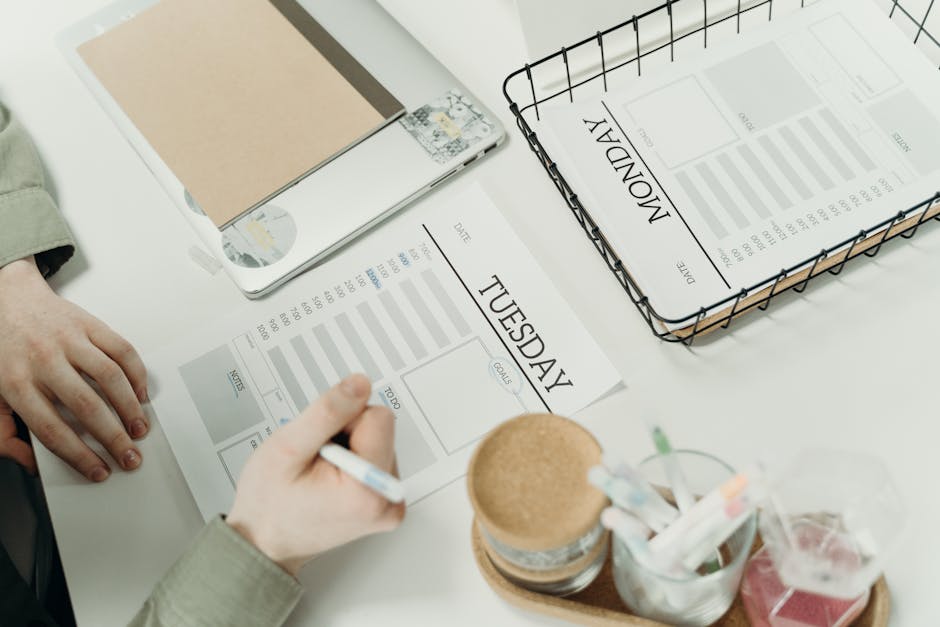
On a typical weekday, a freelancer sits down at their cluttered desk, where a worn task notebook lies open, filled with a long to-do list. The first few items are clearly marked, but as they scan the page, they notice that the top three tasks never get rewritten, a missed opportunity to prioritize effectively. This notebook serves as the anchor for their workflow, yet it quickly gets overshadowed by the chaos of multiple browser tabs open on their computer—each one representing a different project or task.
As they attempt to dive into the first task, notifications ping from various apps, each chime pulling their attention away from the screen. The initial plan for a focus block becomes increasingly difficult to maintain. It seems reasonable at first: with everything laid out in front of them, they can easily switch between tasks. However, the reality is that each switch drains energy and disrupts their attention management. The cluttered workspace—with its mix of physical papers and digital distractions—creates friction that hinders productivity.
To combat this, they decide to mute notifications, a small but significant adjustment that helps reclaim some focus. They also take a moment to check their task list, ensuring that the most critical items are highlighted in a bright color. This simple act of marking tasks not only clarifies priorities but also serves as a visual cue to maintain energy levels during work sessions. Yet, even with these adjustments, the desk surface remains a battleground of competing tasks, leaving them to wonder if the effort of juggling tabs and tools is worth the cost of their energy.
Where It Starts to Fail: The Cost of Split Attention
The freelancer sits at a desk strewn with sticky notes, papers, and half-finished projects, each vying for attention. The clutter makes it difficult to prioritize tasks effectively, leading to a chaotic workflow. With a focus block scheduled for the next hour, they glance at their task notebook, where the top three tasks are highlighted in bright colors. Yet, the surrounding mess distracts from these priorities, creating a visual noise that complicates decision-making.
As the work session begins, the freelancer opens multiple tabs on their computer, each representing a different task. They attempt to switch between these tasks, but every interruption—whether a notification from a messaging app or a stray thought about an unfinished project—pulls them further from their focus. Each time they switch, it feels like a small energy drain, making it harder to regain momentum. They notice that their attention is split not just between tasks but also between tools, leading to a frustrating cycle of task-switching fatigue.
To combat this, they mute notifications from communication apps, a decision aimed at reducing distractions. They also take a moment to check their visible task list and prioritize the most critical items, ensuring that they can see what needs attention without the clutter overwhelming them. However, even with these adjustments, the desk remains a battleground of competing tasks, and they realize that the effort of juggling tabs and tools might not be worth the energy cost. The weak point under pressure becomes clear: despite attempts to manage energy, the chaotic setup of their workspace continues to disrupt focus and drain productivity.
This same friction shows up again in Focus Without Burnout, especially when the day tightens unexpectedly.
A Workable Alternative: Focus Blocks and Intentional Workflow
During a typical weekday, the freelancer sits at a cluttered desk, surrounded by a chaotic mix of notebooks, sticky notes, and an array of open tabs on their laptop. They glance at their task notebook, where the top three tasks are scribbled down but never rewritten, a habit that adds to the confusion. To regain focus, they decide to implement structured focus blocks, setting aside specific time slots dedicated solely to deep work. Before starting, they mute notifications on their phone and close all unnecessary browser tabs, creating a clearer digital workspace.
Next, they pull up their calendar to block off an hour for each focus session, marking it as "Deep Work" on their schedule. This intentional planning reduces the temptation to multitask, as the calendar block serves as a visual reminder of their commitment to concentrate on priority tasks. They then check their visible task list, ensuring it only displays the top three priorities for the day. This simple adjustment minimizes overwhelm, allowing them to focus on one task at a time. However, despite these efforts, the desk's clutter still looms large, reminding them that even with a structured approach, maintaining an organized environment is crucial for sustaining energy and productivity throughout the day. The Tradeoff: Structure vs. Flexibility A structured approach to managing energy often involves setting aside specific focus blocks on the calendar, like a freelancer dedicating 9 AM to 10 AM solely for writing. This method can enhance productivity by creating a clear boundary around tasks, allowing for deeper concentration during those hours. However, for someone who thrives on spontaneity, such rigidity can feel stifling. The desk, cluttered with notes and reminders, reflects this tension; the freelancer may hesitate to dive into a task when the environment feels chaotic, causing a split in attention between the physical space and the mental focus required.
When adhering strictly to a schedule, the freelancer risks missing unexpected opportunities that arise during the day. For instance, a sudden email from a client might offer a new project that requires immediate attention, but with a focus block in place, responding could be delayed. This missed chance highlights the downside of a rigid structure; while it promotes discipline, it can also lead to energy mismanagement if flexibility is not incorporated. The freelancer might find themselves staring at the task notebook, where the top three tasks remain unchanged, even as new priorities emerge.
Balancing structure with flexibility can be tricky. A practical approach might involve muting notifications during focus blocks but allowing for brief check-ins at the top of each hour. This way, the freelancer can maintain a rhythm while still being open to the unexpected. However, the clutter on the desk serves as a constant reminder that even the best-laid plans can falter without an organized environment. Ultimately, the tradeoff between structure and flexibility is worth considering, as each has its merits and pitfalls in the quest for effective energy management.
When That Alternative Fits Better
If this pattern keeps repeating, Managing Energy Not Time extends the idea without leaving the niche.
During a typical weekday, the freelancer sits at a cluttered desk, surrounded by a mix of notebooks, sticky notes, and open tabs on the laptop screen. The task notebook lies open, revealing a list of three core tasks that never seem to change. This rigidity can stifle energy flow, especially when unexpected priorities arise. The tension builds when the freelancer realizes that the calendar block for a focus session has been set, yet the desk's chaotic surface does not align with the planned tasks.
Switching gears between tools and reminders often leads to a sense of overwhelm. To combat this, the freelancer decides to mute notifications during the focus block, allowing for uninterrupted work on the first task. However, the clutter remains a distraction, pulling attention away from the task at hand. A practical adjustment could involve creating a visible task list on a whiteboard or sticky note, ensuring that only the most relevant tasks are highlighted for each work session. This visible cue can serve as a constant reminder of priorities, reducing the mental load of task-switching.
As the freelancer begins to tackle the first task, they notice that the energy dips when attention is split between checking reminders and navigating the desk's disarray. The challenge lies in balancing the structured calendar block with the need for flexibility; sometimes, the best alternative is to embrace a more fluid approach, allowing for spontaneous adjustments when energy levels shift. This realization underscores the importance of creating an environment that supports the workflow habits necessary for effective energy management.
As the freelancer settles into the work session, the clutter on the desk becomes a tangible reminder of how easily energy management can falter. When attention is split between multiple tabs and notifications, the focus block intended for deep work can quickly dissolve into chaos. Keeping the top three tasks visible in a dedicated notebook can help maintain clarity amidst the distractions. This simple act of jotting down priorities not only streamlines the workflow but also reinforces the need to mute notifications during critical focus blocks.
Ultimately, the challenge lies in recognizing that the environment must align with energy levels. By prioritizing a clean workspace and a clear task list, the freelancer can better navigate the tension between structured time management and the fluidity required for effective energy use. The next time they sit down to work, they should check that their desk is organized and their task list is front and center, ready to guide their focus.